Yo-yos since 1984

Yomega Yoyo

Yomega made the Brain, the auto-return yo-yo a lot of us learned on. The lineup still starts there and goes on to the Fireball, the light-up Spectrum, the Raider for looping, and the aluminum Maverick. Pick the one that fits your skill level, not just your favorite color.

4.6 / 5 · 14,300+ reviews
Beginner to advanced models

Featured Yomega Yo-Yos

Filter by skill level. Each card shows how the yo-yo returns, its weight, and its size, so you can compare at a glance.

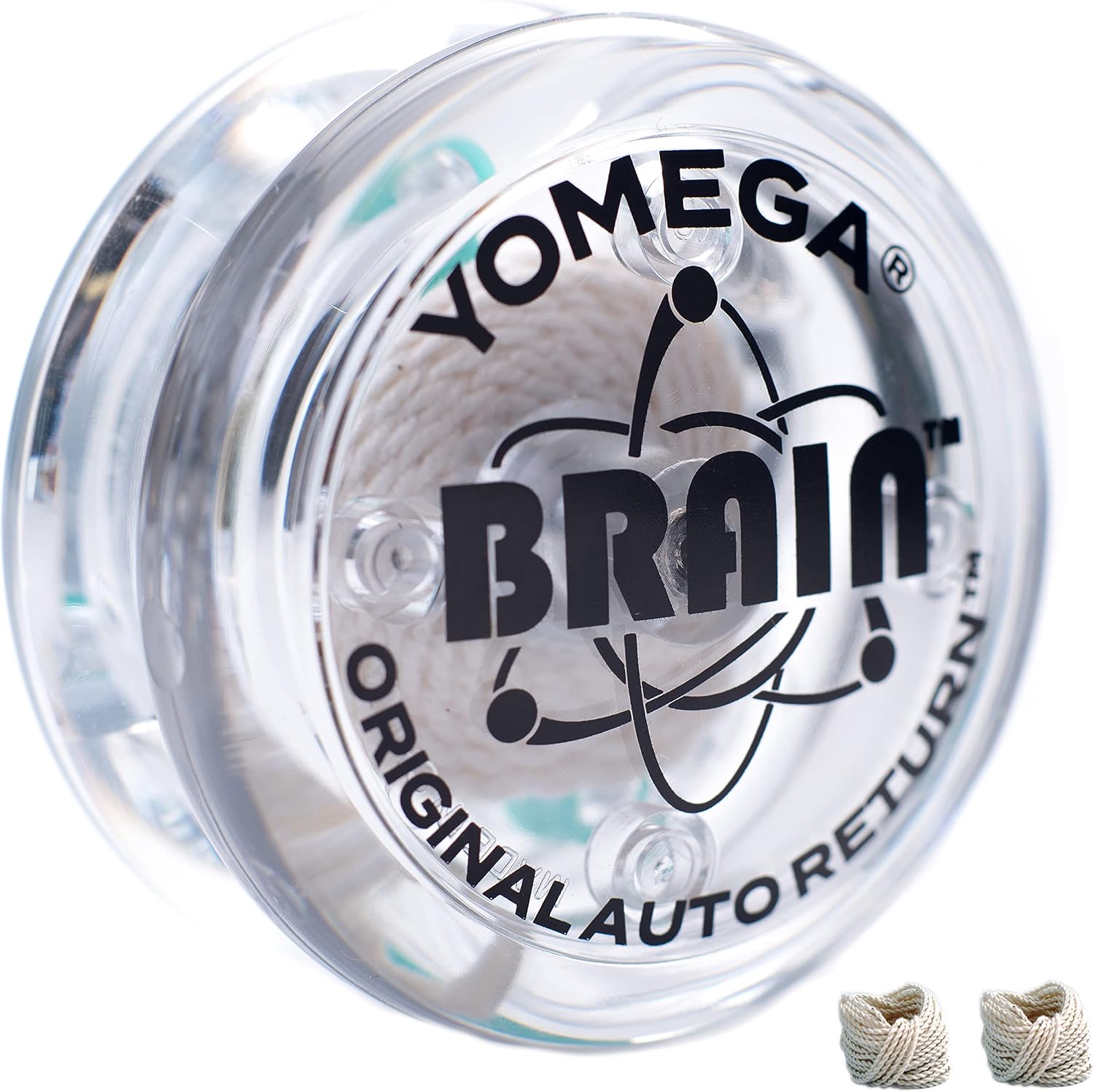
Yomega Brain auto-return yo-yo in clear plastic with the original Brain logoBeginner

Yomega Brain

The original auto-return yo-yo

  • Auto-return clutch
  • 59 g (2.1 oz)
  • 58.7 mm (2.3 in)

A clutch inside lets the Brain spin at the end of the string, then winds it back up once the spin slows. Kids get to practice the Sleeper and Walk the Dog before they've mastered the return.

Color: Clear

See Colors & Price
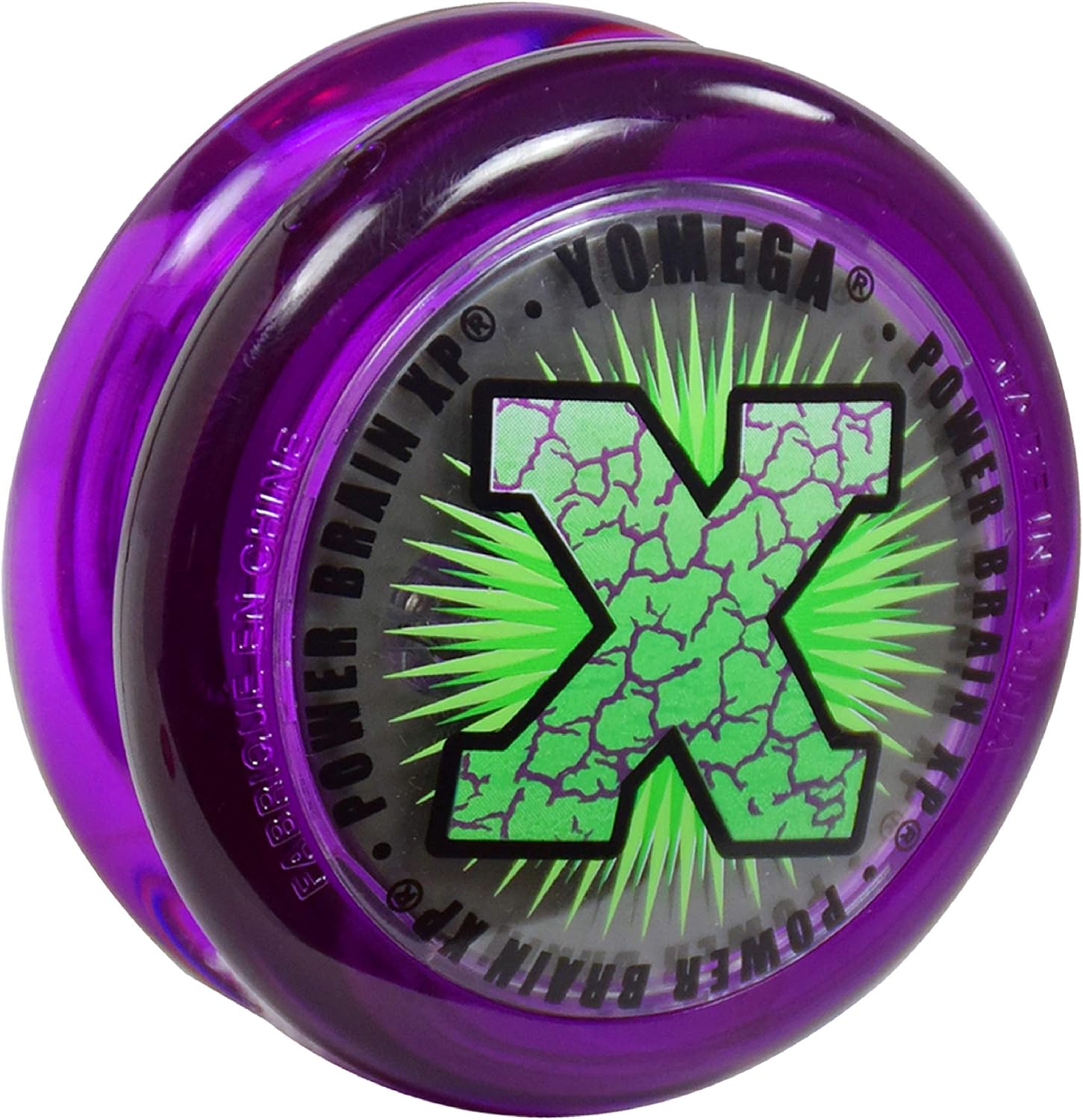
Yomega Power Brain XP yo-yo in translucent purple with a green X logoBeginner

Yomega Power Brain XP

Auto-return now, manual later

  • Switchable return
  • 69 g (2.4 oz)
  • 60.3 mm (2.4 in)

Works like the Brain while your kid learns to throw. Once they can bring a yo-yo back with a tug, switch it to manual return and keep using the same yo-yo.

See Colors & Price
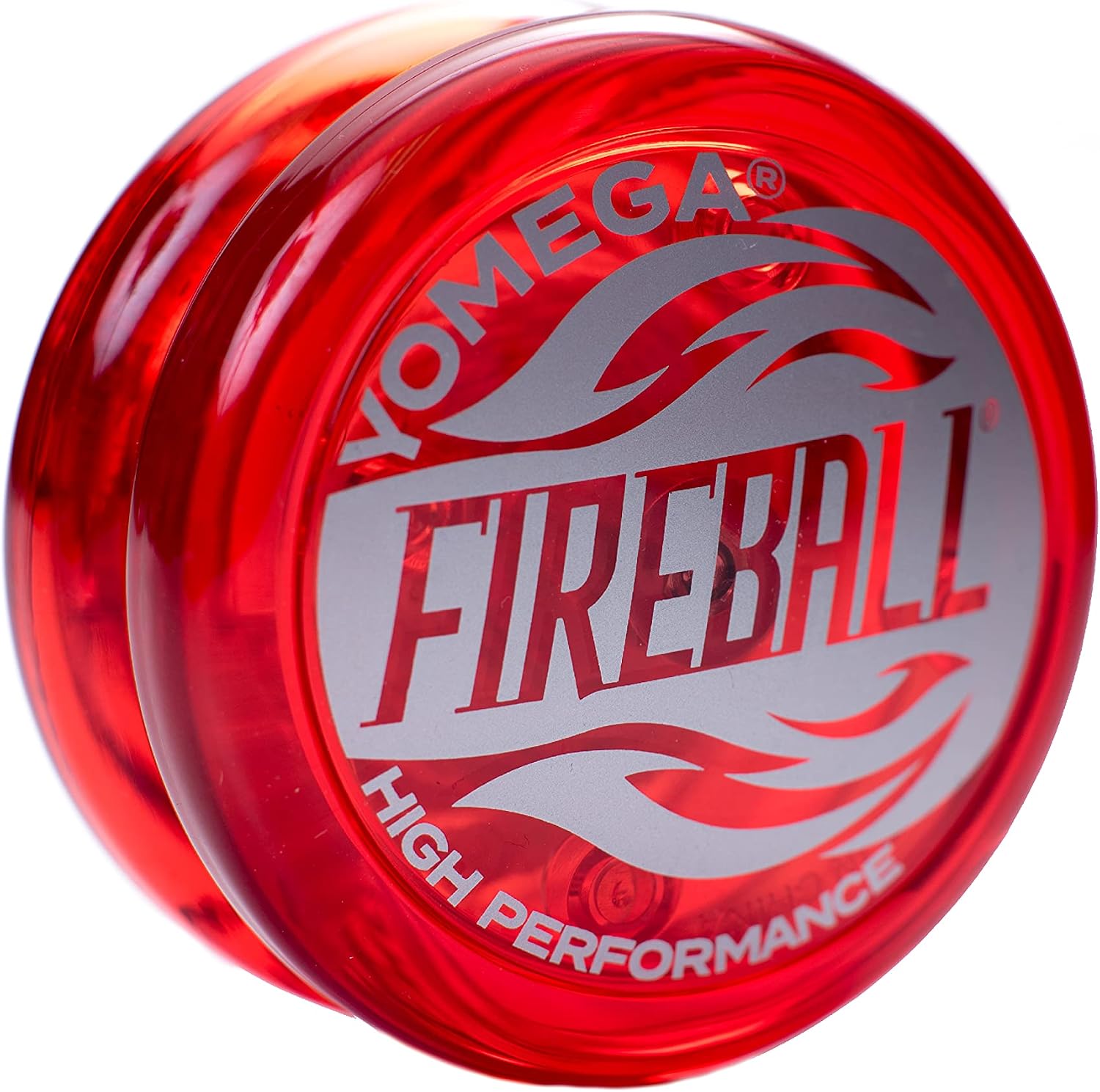
Yomega Fireball transaxle yo-yo in translucent red with silver flame logoIntermediate

Yomega Fireball

The classic transaxle yo-yo

  • Transaxle
  • 52 g (1.8 oz)
  • 58.4 mm (2.3 in)
  • 2.5 mm gap

A plastic sleeve turns around the axle, so the string drags less and the yo-yo sleeps longer. There's no auto-return. A quick tug brings it back. The halves unscrew for string changes.

Color: Red

See Colors & Price
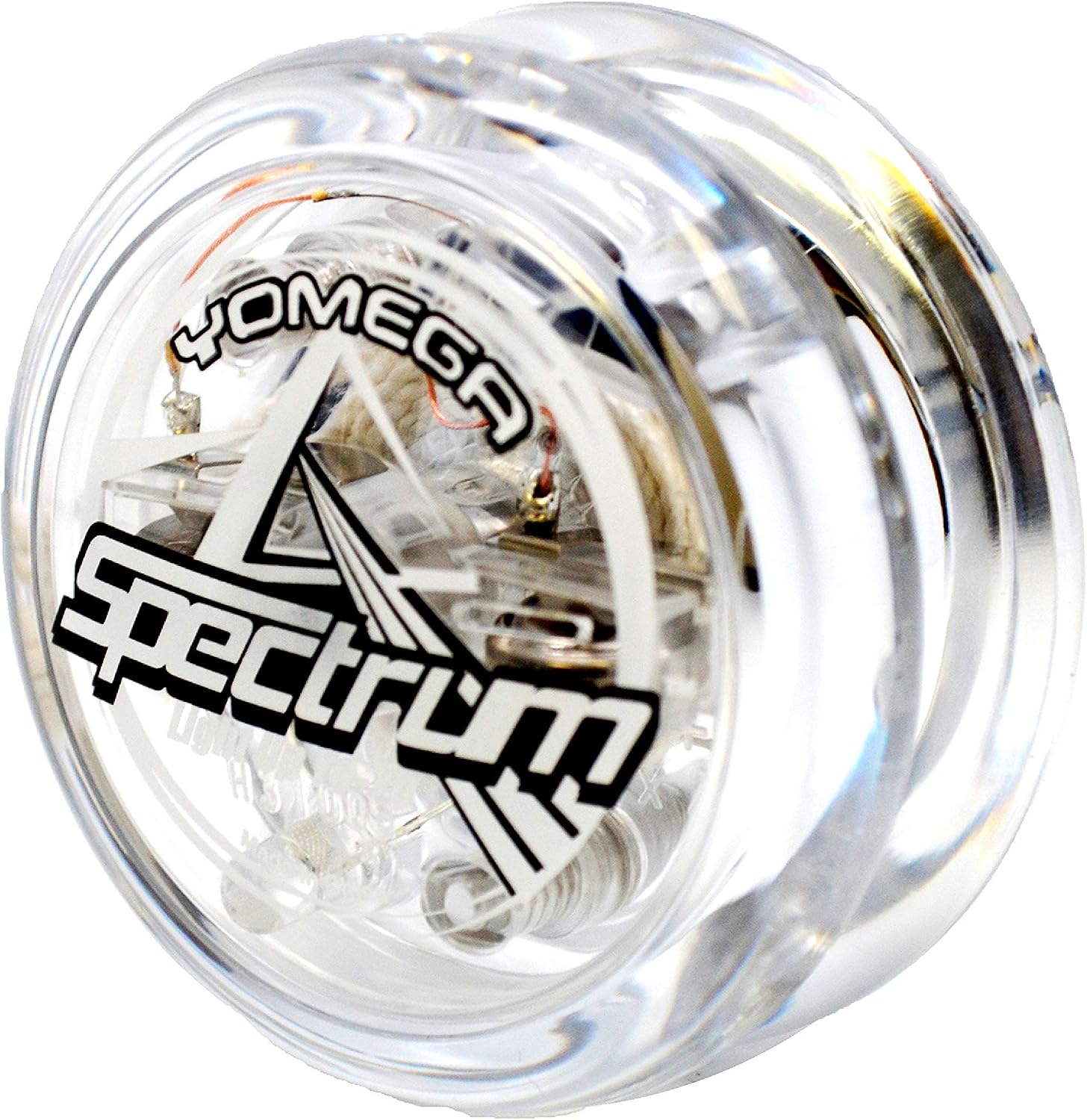
Yomega Spectrum light-up yo-yo in clear plastic showing the LED circuit insideIntermediate

Yomega Spectrum

Light-up yo-yo

  • LED lights
  • Transaxle
  • 62 g (2.2 oz)
  • 58.4 mm (2.3 in)

The Fireball's transaxle setup with multicolor LEDs that come on when it spins. No switch to mess with mid-trick. It looks best in a dim room or outside at dusk.

Color: Clear

See Colors & Price
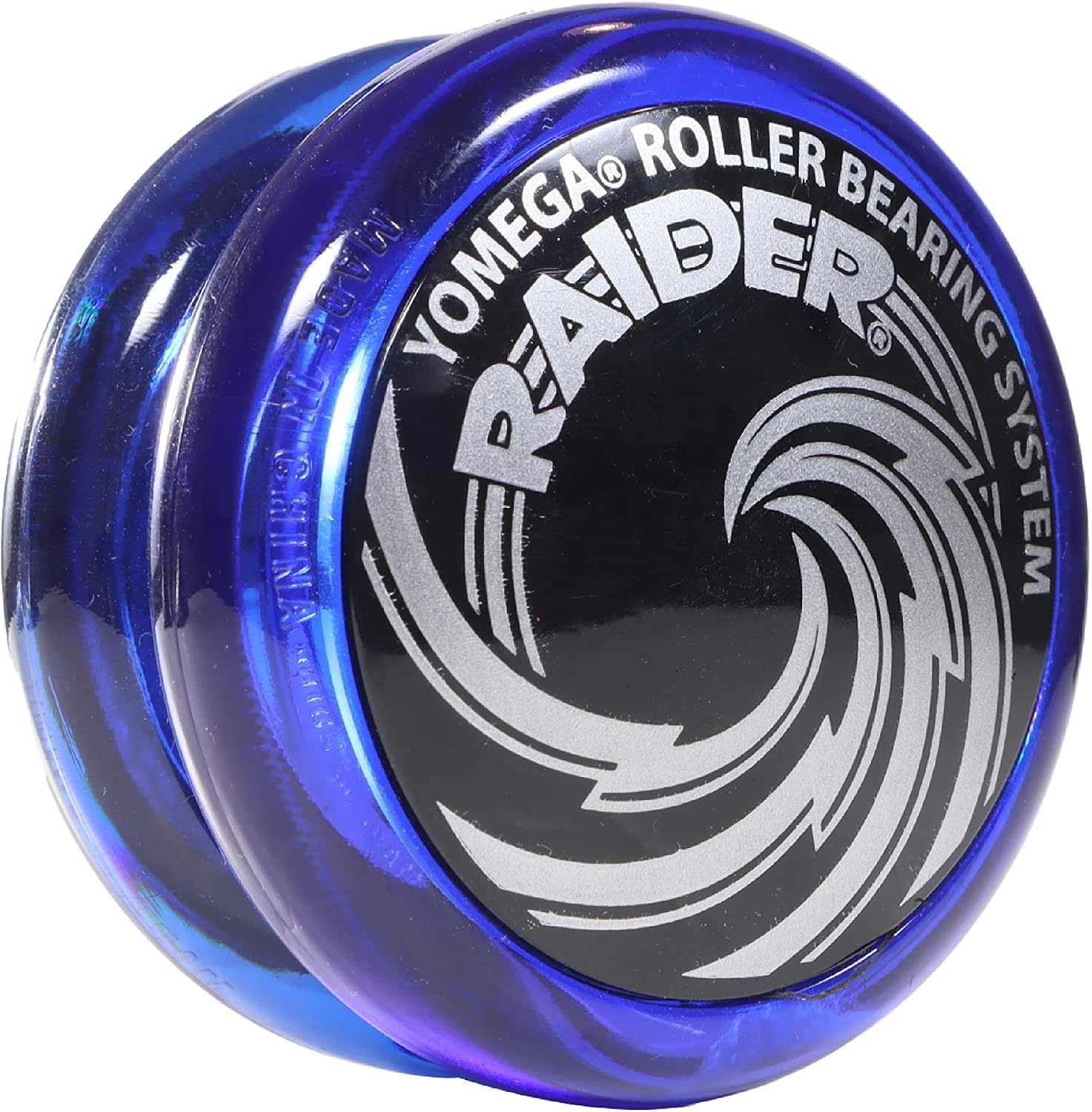
Yomega Raider ball-bearing yo-yo in blue with a black and silver Raider capIntermediate to advanced

Yomega Raider

Ball-bearing looping classic

  • Ball bearing
  • Responsive
  • Built for looping

A 1990s favorite that looping players still use. The rounded shape and steady, responsive return suit Around the World, Loop the Loop, and two-handed 2A play.

Color: Blue / Black

See Colors & Price
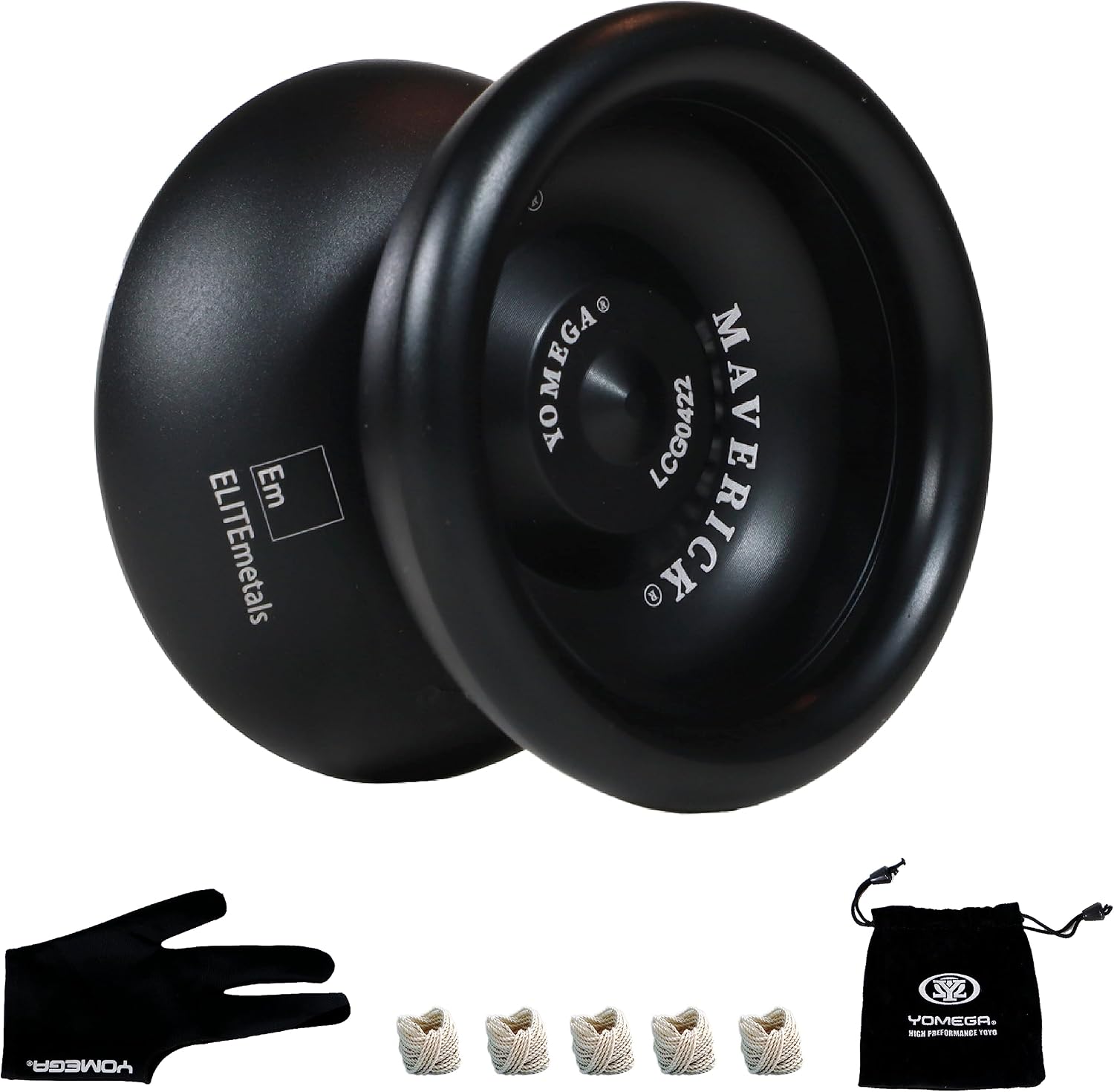
Yomega Maverick aluminum ball-bearing yo-yo in blackAdvanced

Yomega Maverick

Aluminum yo-yo with a C-size bearing

  • Aluminum body
  • C-size bearing
  • 60 g (2.1 oz)
  • 52.3 mm (2.1 in)

Machined aluminum with a wing shape and a weighted rim for longer spins. Silicone pads keep it responsive, so it still comes back with a tug. A good first metal yo-yo.

See Colors & Price
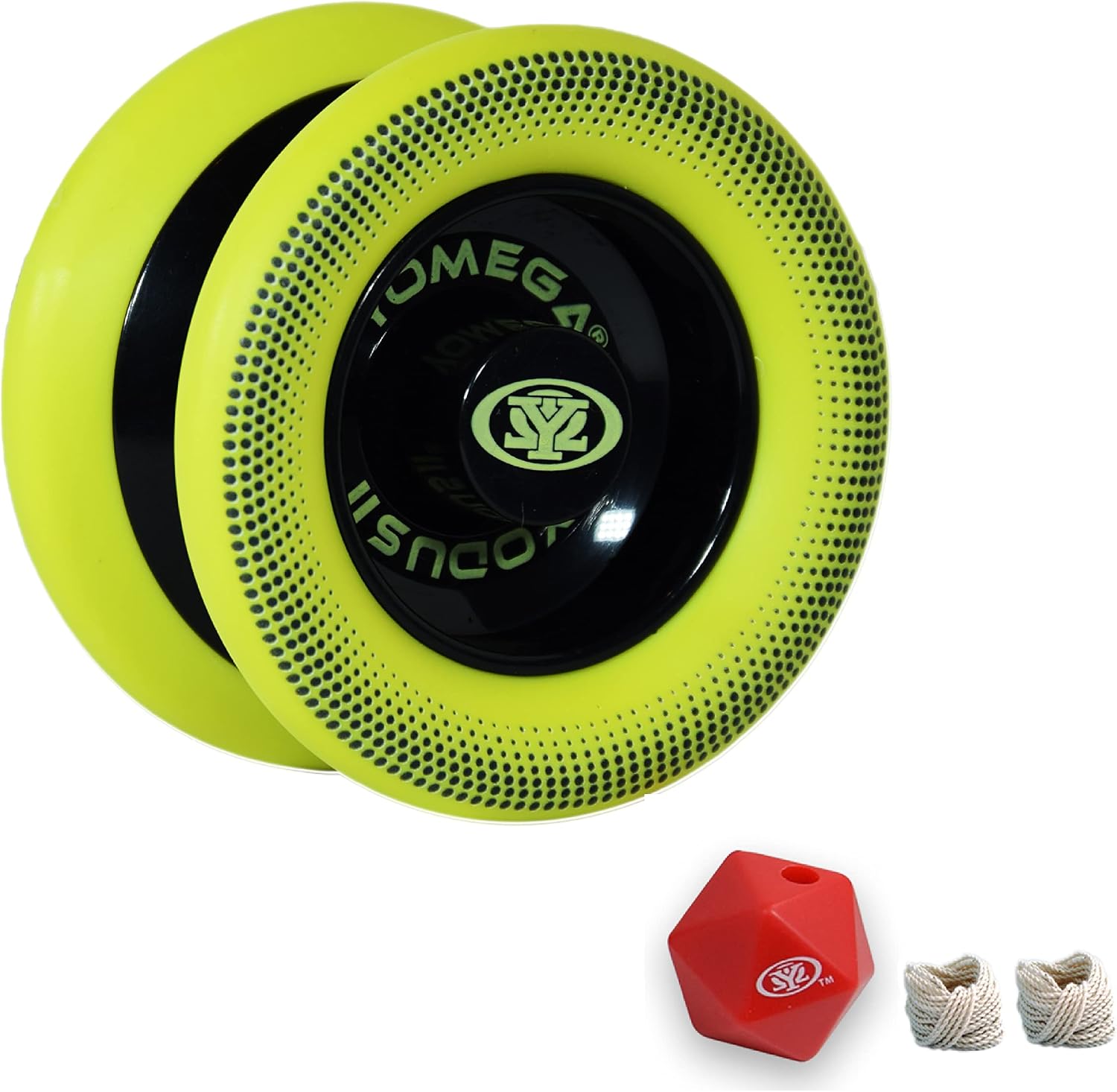
Yomega Xodus II wide-body yo-yo with yellow rims and a black centerAdvanced

Yomega Xodus II

Wide-body yo-yo for string tricks

  • Wide profile
  • For string tricks

A wide butterfly shape gives you more room to land the yo-yo on the string. It's a step up for players who've outgrown the Fireball and want to work on longer combos.

See Colors & Price
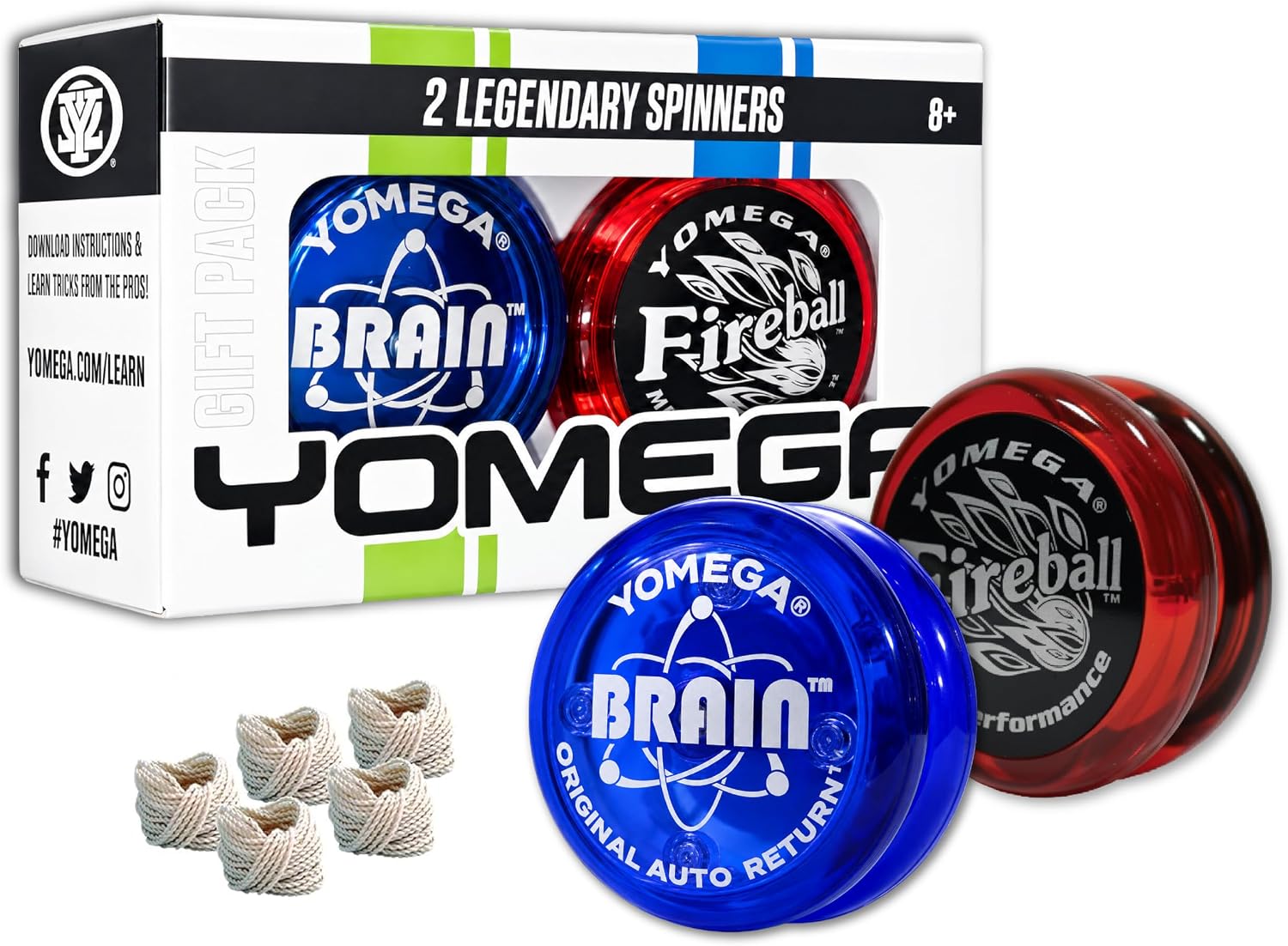
Yomega 2 Legendary Spinners gift pack with a blue Brain yo-yo, a red Fireball yo-yo and spare stringsGift pack

Brain + Fireball 2-Pack

Two legendary spinners

  • Brain + Fireball
  • Spare strings

Learn on the Brain, then move to the Fireball once the tug return clicks. It covers the first few months of practice and makes an easy birthday gift.

See Colors & Price
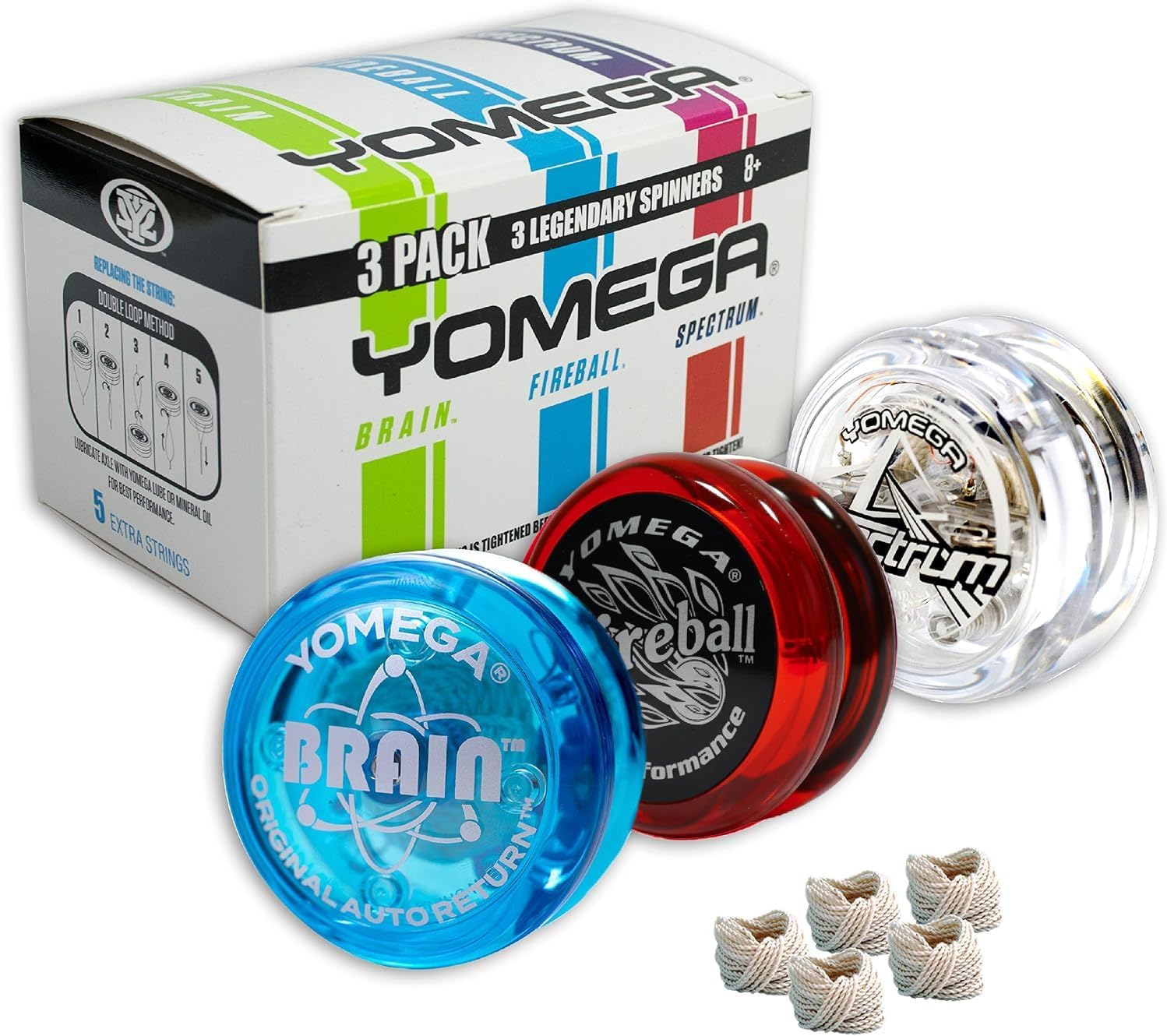
Yomega 3-pack with a light blue Brain, red Fireball and clear Spectrum yo-yo plus spare stringsGift pack

Brain + Fireball + Spectrum 3-Pack

Three legendary spinners

  • Brain + Fireball + Spectrum
  • Spare strings

Auto-return Brain, transaxle Fireball, and the light-up Spectrum in one box. Handy when more than one kid is learning, or for a player who wants to move up without another order.

See Colors & Price

Which Yomega Yo-Yo Should You Get?

Go by skill level first. Looks and price come second.

  • Never thrown a yo-yo, or a younger kidBrainComes back on its own while you learn the throw.
  • A beginner who wants room to growPower Brain XPSwitch from auto-return to manual when you’re ready.
  • Can already bring a yo-yo back with a tugFireballTransaxle for longer sleepers, classic responsive feel.
  • Wants tricks that light upSpectrumFireball-style play with LEDs that turn on as it spins.
  • Into looping and 2ARaiderBall bearing, rounded body, steady return for repeated loops.
  • Ready for a first metal yo-yoMaverickAluminum body and C-size bearing, still returns with a tug.
  • Working on longer string tricksXodus IIWide profile with more room to land on the string.

Heavier isn't always better

A heavier yo-yo can feel steadier on the throw, but where the weight sits matters just as much. Two yo-yos with nearly the same weight can play very differently because of their shape.

Don't buy unresponsive too early

An unresponsive yo-yo won't come back from a normal tug. It needs a bind. That's the most common buying mistake. If the player is still learning, stick with a responsive model.

How Yomega Yo-Yos Work

Every yo-yo stores energy in its spin. What's inside decides how long it sleeps and how it comes back.

Brain, Power Brain XP

Auto-return clutch

A centrifugal clutch opens on a strong throw and lets the yo-yo spin at the end of the string. As the spin slows, the clutch grabs the axle and the yo-yo winds itself back up. It's all mechanical, no batteries.

Fireball, Spectrum

Transaxle

A plastic sleeve spins around the axle so the string isn't rubbing on it directly. Less friction means longer sleepers, and a light tug still brings the yo-yo home.

Raider, Maverick

Ball bearing

A bearing cuts friction even more, so spins last longer and feel smoother. Whether it comes back with a tug depends on the response setup.

Why it matters

Responsive vs. unresponsive

A responsive yo-yo returns when you tug. An unresponsive one keeps spinning until you do a bind, feeding slack string into the gap so it catches. Great for advanced combos, frustrating for a beginner.

Four Yo-Yo Tricks to Learn First

1

The Sleeper

Throw down firmly and let the yo-yo spin at the bottom of the string. Keep your hand still. On a responsive yo-yo, a small tug brings it back. Aim for a slow count of three, then five.

2

Walk the Dog

Throw a strong Sleeper, then set the spinning yo-yo gently on the floor so it rolls forward. Pull it back before it stops. A smooth, hard floor works best. Carpet won't, and nice hardwood can scuff.

3

Rock the Baby

From a Sleeper, pinch the string into a triangle and swing the yo-yo through it like a cradle. It's the first trick where you're actually working the string.

4

Around the World & Loop the Loop

Around the World swings the yo-yo in a big circle before it returns. Loop the Loop keeps it going in repeated forward loops. Give yourself room, away from people, lamps, and TVs.

Before you throw: set the string length. Let the yo-yo touch the floor and cut the string at about waist height, a little shorter for small kids. Tie a slipknot loop and wear it on your middle finger, between the first and second knuckle.

What Yomega Owners Say

4.6 out of 5 from 14,300+ customer reviews

As a parent, I can't say enough good things about the Yomega The Original Brain yoyo. It's been an excellent choice for my child who's just getting into yoyoing and wants to explore this classic skill toy. One of the standout features of the Yomega Brain is…

Chris

This is a great yo-yo for your kids. My son loves using it, and it reminds me of my old Brain yo-yo from when I was growing up. It works exactly the same as the old ones. I'm able to get it to hang down for a reasonable amount of time. If you need more than…

Kyle

I remember when I little I tried to pick up yoyoing but failed and hated how I could never get it back in my hand or even sleep. Now in College I decided to take it up again. The Yomega Brain is great for the absolute beginner who does not know jack squat of…

Cooljoe

What’s not to like here? I amazed my grandchildren after I resurrected some of my yo-yo skills from way back. Works great but I need to practice! :-)

Dennis

I imported a few Spectrum EX's to the UK as I'm a big fan of the Yomega Spectrum and expected it to perform like a Raider EX out the box - both are advertised with the same form factor, bearing and interchangable spacers. I'm not sure what the core…

Brookes

I was worried after reading some negative reviews, I bought this for my son and we have played with it, seems to be just as good as the old ones, any comments on the starburst wearing has me thinking they are using nylon string, if you get this be sure to get some good cotton string.

Tristen

A Yo-Yo for Every Stage

The same brand can take a player from a first throw to tricks on the string.

First-Time Kids

The Brain handles the return while they learn to throw straight, so the first week is fun instead of frustrating.

Parents & Grandparents

Had a Brain or Fireball growing up? These work the way you remember, so you can actually teach the tricks.

Looping Players

The Raider's rounded shape and steady return are made for repeated loops, one-handed or 2A.

String-Trick Learners

The Maverick and Xodus II give you more spin and more room to land the yo-yo on the string.

After-Dark Throwers

The Spectrum lights up as it spins, which makes tricks easier to follow and a lot more fun to watch at night.

Gift Buyers

The 2-pack and 3-pack cover the first few months of learning in one box, spare strings included.

Yomega: 40 Years of Yo-Yo Ideas

Yomega started in 1984 with one idea: a yo-yo that comes back on its own. Inventor Michael Caffrey patented a centrifugal clutch, built it into the Yo-Yo with a Brain, and founded the company around it. Kids could finally get long spins before they'd figured out the timing of a return.

The Fireball came next with a transaxle that let the yo-yo spin longer, and the Raider brought ball bearings to looping play. Both were big during the 1990s yo-yo boom, and both are still in the lineup today, next to newer aluminum models and pro-level designs like the PRO-X 2.

The idea behind the lineup hasn't changed much: match the yo-yo to where the player is, so practice feels like progress. A yo-yo builds timing, focus, and hand-eye coordination, and it's one of the few toys that can grow into a hobby with hundreds of tricks.
Yomega Yo-Yo FAQ

Yomega is an American yo-yo brand founded in 1984, known for its spinning mechanisms and performance-oriented yo-yos. Its best-known models include the Brain, Fireball, Raider, and Maverick. The lineup runs from auto-return yo-yos for first-time players to machined metal yo-yos for advanced tricks. Yomega also makes accessories and traditional skill toys like the kendama.

The original Yo-Yo with a Brain was invented by Michael Caffrey. He patented its centrifugal clutch before founding Yomega in 1984, and it's still one of the best-known ideas in yo-yo history. The clutch lets the yo-yo spin freely after a throw and return on its own as it slows, which made yo-yos far easier for beginners to pick up.

The Yomega Brain is a great place to start because the auto-return means you don't need a precise wrist tug right away. The Power Brain XP adds a switch between automatic and manual return, so it keeps up as you improve. If you can already throw and bring back a regular yo-yo, the Fireball is a good next step for longer spins and intermediate tricks.

The Brain has a centrifugal clutch inside. On a strong throw, the clutch opens and the yo-yo spins at the bottom of the string. As the spin slows, the clutch closes around the internal spool and the string winds back up. It works mechanically, with no batteries or electronics. You can also tug the string to bring it back sooner.

The Brain returns on its own when its spin slows, which makes it easier for beginners to learn basic tricks. The Fireball uses a transaxle that cuts friction for longer, smoother spins, but you bring it back with a wrist tug. The Brain is about learning control. The Fireball is better for building intermediate string tricks and classic responsive play.

Yes. The Fireball is built for responsive tricks like the Sleeper, Walk the Dog, Around the World, and basic string combos. Its plastic transaxle keeps it spinning longer than a fixed axle, and it handles classic looping practice too. If you mainly want advanced unresponsive string tricks, you'll be better off with an unresponsive ball-bearing yo-yo with a wider gap.

The Raider is a classic ball-bearing yo-yo tied to competitive looping and the 1990s yo-yo boom. Its rounded body and responsive return suit repeated looping moves, including two-handed 2A tricks. Wide-body yo-yos are designed mostly for landing on the string. The Raider is about smooth, consistent loops and controlled returns.

Yes. The Spectrum's multicolor LEDs switch on when the yo-yo spins and make bright circles of light, especially in a dark room. It uses the same general transaxle system as the Fireball, so it's a real responsive yo-yo, not just a light-up novelty. The clear body keeps the lights visible.

Yes. The Maverick has an aircraft-grade aluminum body with a wing-shaped profile and a weighted rim. It weighs about 60 grams and uses a C-size ball bearing with silicone response pads. The machined body spreads its weight differently from a plastic yo-yo, so it feels different in play. The standard Maverick is responsive, which makes it a good bridge into more technical ball-bearing yo-yos.

A responsive yo-yo comes back to your hand when you give the string a controlled tug. An unresponsive yo-yo won't come back from a simple tug. You need a bind to rewind the string. Responsive models suit beginners, classic tricks, and looping. Unresponsive setups are preferred for many advanced string combos because the yo-yo won't return by accident. The Yomega PRO-X 2 can be set up either way.

Take the worn string off the axle and put on the new one the way your model calls for. The Brain, Power Brain XP, Fireball, and Spectrum use the double-loop method around the spool or axle. The Raider and Maverick use a single loop. For length, let the yo-yo touch the floor and cut the string at about waist height. Swap strings when they get frayed, dirty, or badly twisted.

It depends on the mechanism. A Brain may not come back if the throw isn't strong enough, the string is on wrong, the clutch O-ring is missing, or the axle needs lube. Transaxle and ball-bearing yo-yos can also stop returning because of a worn string or the wrong maintenance. First, check that your yo-yo is meant to be responsive. Fully unresponsive models need a bind, not a regular tug.

Some do, now and then, to keep the right response and cut down on internal noise. The right lube and method depend on the mechanism. Yomega recommends yo-yo lube or a small amount of mineral oil for some classic models. Skip aerosol spray lubricants, especially around plastic parts. Ball-bearing yo-yos may need different care depending on the response you want, so follow the instructions for your model.

Yes. You'll find solid colors, translucent plastic, two-tone designs, and anodized aluminum finishes across the lineup. The Brain comes in several clear and solid colors, the Fireball has classic contrast combos, and the Maverick comes in several metallic finishes. Availability changes by model and production run. Different colors of the same model generally share the same core specs.

Yomega offers a limited three-month warranty against defects in materials and workmanship, starting on the original purchase date. It covers the original buyer and doesn't cover normal wear, accidental damage, misuse, or modifications. Strings and batteries aren't covered. Claims need product registration and proof of purchase, and Yomega may repair or replace eligible products at its discretion. Accessories and package contents vary by model.

Find Your Next Yomega

Start with the Brain, move up to the Fireball, or go straight to metal. Every model, color, and gift pack is in one place.

Shop Yomega Yo-Yos